
Faarmacos
Improving treatment adherence through digital pharmaceutical care.
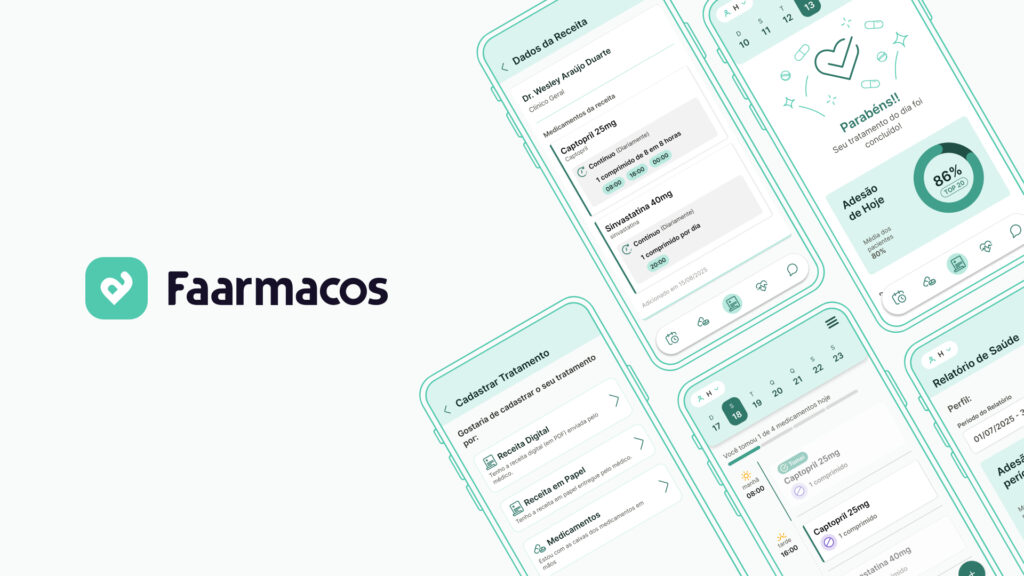
How we transformed a pain observed at the pharmacy counter into a digital platform to increase adherence to the treatment of patients with chronic diseases.
Low adherence to treatment is one of the most neglected health problems.
Every day, millions of patients leave medical appointments understanding their diagnosis and receiving a prescription, but find it difficult to maintain treatment over the following weeks and months. Most of the time, this problem is not related to the patient's unwillingness.
It is a consequence of a combination of factors: complex treatments, doubts about medicines, adverse reactions, absence of pharmaceutical follow-up after purchase, and the effort required to correctly administer a routine of medications.
Although there are dozens of medication reminder apps, practically all try to solve the same issue:
"Don't forget to take your medicine."
Our research showed something different.
Patients do not abandon treatment just because they forget. They give up because maintaining treatment becomes a difficult task.
This insight completely changed the direction of the project.
Instead of developing another reminder application, we created a digital platform capable of extending pharmaceutical care beyond the pharmacy counter, accompanying patients throughout the treatment journey.
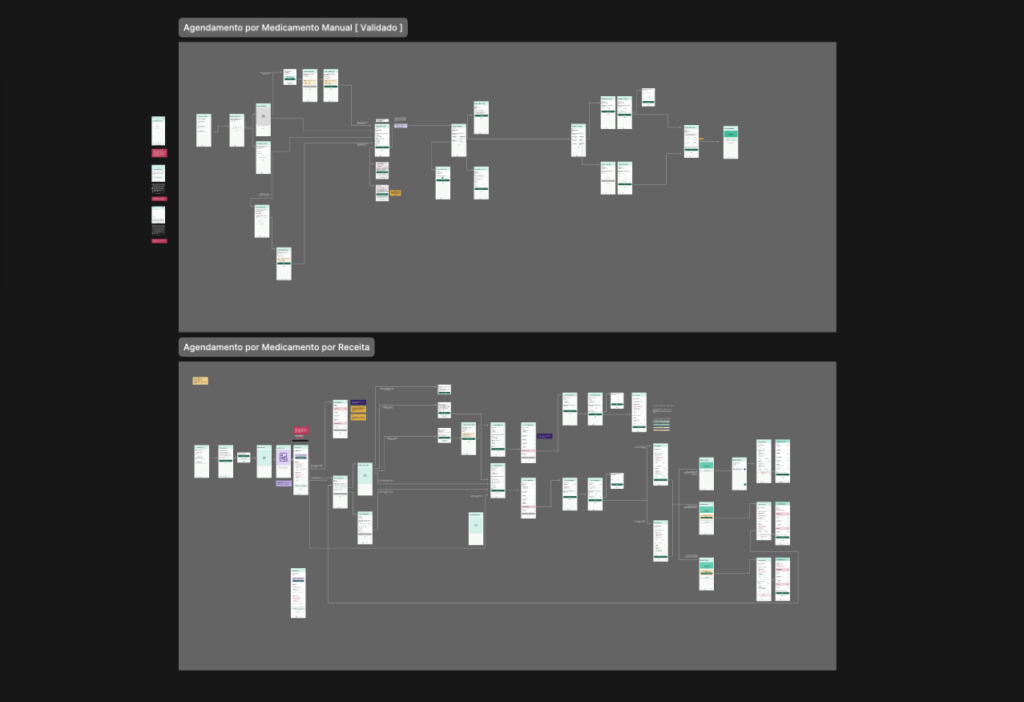
As Product Designer and co-founder, I was responsible for product strategy, research, information architecture, UX/UI design, and MVP prototyping, working together with pharmacists and development to transform clinical knowledge into a scalable digital experience.
Why this project matters
Healthcare systems invest enormous resources in diagnosing diseases and defining treatments. However, as soon as patients leave the doctor's office, clinic, or pharmacy, they typically start facing treatment on their own.
For people with chronic conditions, managing medication stops being a one-off task and becomes part of the daily routine. Remembering schedules, interpreting prescriptions, handling multiple medications, and identifying potential risks all become the patient's own responsibility.
Unfortunately, that's exactly the moment when professional support tends to disappear.
That gap is where the Faarmacos opportunity emerged. Our goal was never just to digitize pharmaceutical services. Our goal was to redesign the entire treatment experience.
01 · The challenge
More than 52% of Brazilians live with some chronic disease, and millions abandon their treatments ahead of time.
Initially, we believed that the problem was forgetfulness.
But, when investigating further, we realized that the real challenge was much greater: administering a continuous treatment is complex.
Patients deal daily with multiple medications, different schedules, side effects, questions about prescriptions, and little guidance between appointments.
Our challenge has become:
How can we accompany the patient throughout the treatment journey and not just remind him to take medication?
02 · Jornada Atual
03 · Research
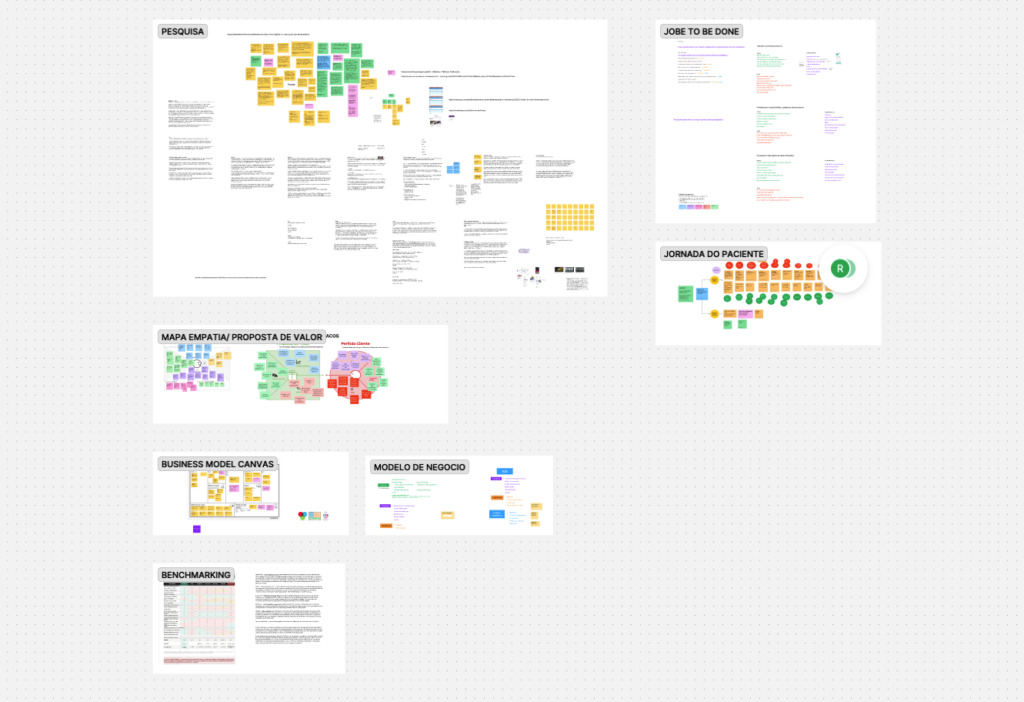
Before designing any solution, we seek to understand the problem from different perspectives.
Our research combined:
This combination allowed us to validate both the behavior of patients and the needs perceived by health professionals.
04 · Main findings
The problem wasn't just forgetting the medicines.
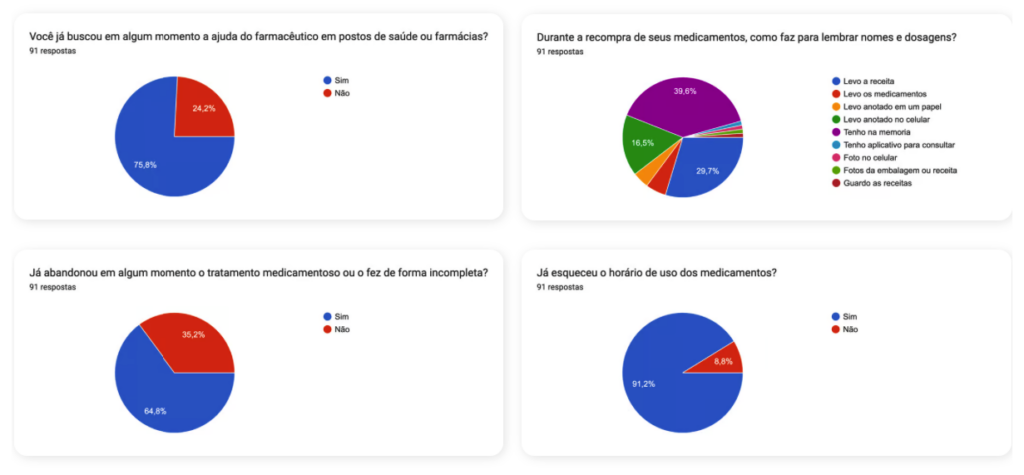
91% of patients had already forgotten medication schedules, and 65% had already stopped treatments. We realized that the problem was the complexity of the routine, not just the memory.
Create an experience centered on treatment, not just reminders.
The registration needed to be almost invisible
Registering medicines manually required a lot of effort.
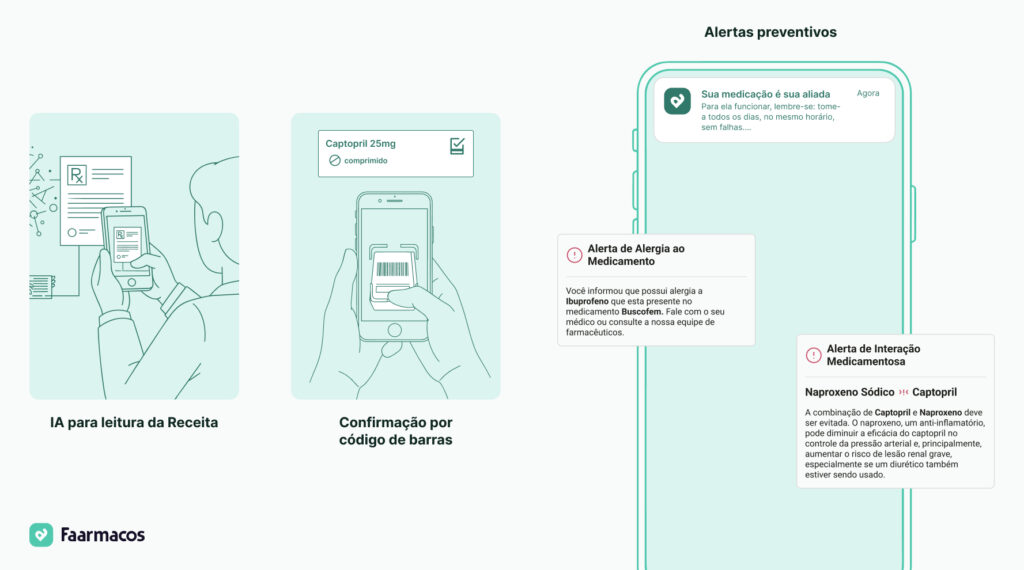
Use recipe reading by AI and barcode validation to reduce typing.
Patients miss follow-up
More than half of the participants said they did not receive guidance when purchasing their medicines, but 76% have already sought a pharmacist to ask questions.
Incorporate a direct channel with pharmacists within the application.
Technical language generates insecurity
During the tests, we noticed that many users did not understand medical terms present in the interface.
Replace technical terms with simple language whenever possible.
Small usability problems create large barriers
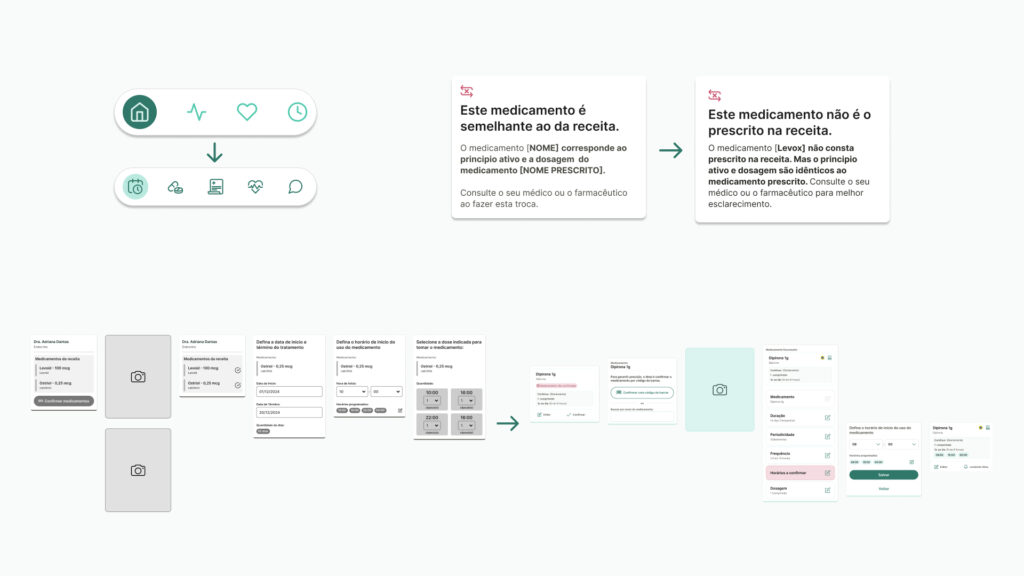
The tests showed difficulties in navigating, interpreting icons, and confirming medications after reading the prescription.
Review navigation, nomenclature, visual feedback, and critical flows.
06 · The solution
Each MVP functionality responds directly to a need identified in the survey.
07 · Usability tests
After developing the prototype, we conducted moderate interviews with five patients.
The sessions revealed problems that had not been identified by the team.
Among the main improvements implemented were:
- Simplification of navigation;
- Replacement of icons by more familiar elements;
- Review of alert messages;
- Improvement of the medication confirmation flow;
- Use of more accessible language
Designing interfaces is only half the job. Watching people use these interfaces is what really improves the product.
08 · Impact
Although the MVP is still under development, the project has already achieved important validations.
- Selected for the Centelha Bahia Program.
- Participation in Supera.
- Participation in Desavexe.
- Selected among the Top 1,000 startups of the Sebrae Startups 2026 Award.
- MVP in development with continuous validation with patients and pharmacists.

More important than the awards, the project consolidated a clear direction for product evolution based on research evidence and user feedback.
09 · Learning
Este projeto mudou minha forma de enxergar produtos digitais para saúde.
I learned that adherence to treatment does not depend only on reminders. It depends on reducing friction, facilitating decisions, and offering continuous support to the patient.
It also reinforced one of the main lessons I take to any project:
The role of the Product Designer is not to design more functionalities. It is to identify which ones really solve the problem.