
Villa Santa Cruz
Building a digital experience that sells a lifestyle, not just land.
How we transformed the launch of a high-end condominium into an immersive digital experience focused on value perception and the generation of qualified leads.
Real estate launches usually follow a very predictable structure.
- Image gallery
- Batch table
- Map
- Contact form
This format communicates information, but hardly transmits the main differential of a high-standard enterprise: The experience.
At Villa Santa Cruz the greatest asset was not the infrastructure.
It was the environment itself. The preserved Atlantic Forest. The sea view. The silence. The exclusivity.
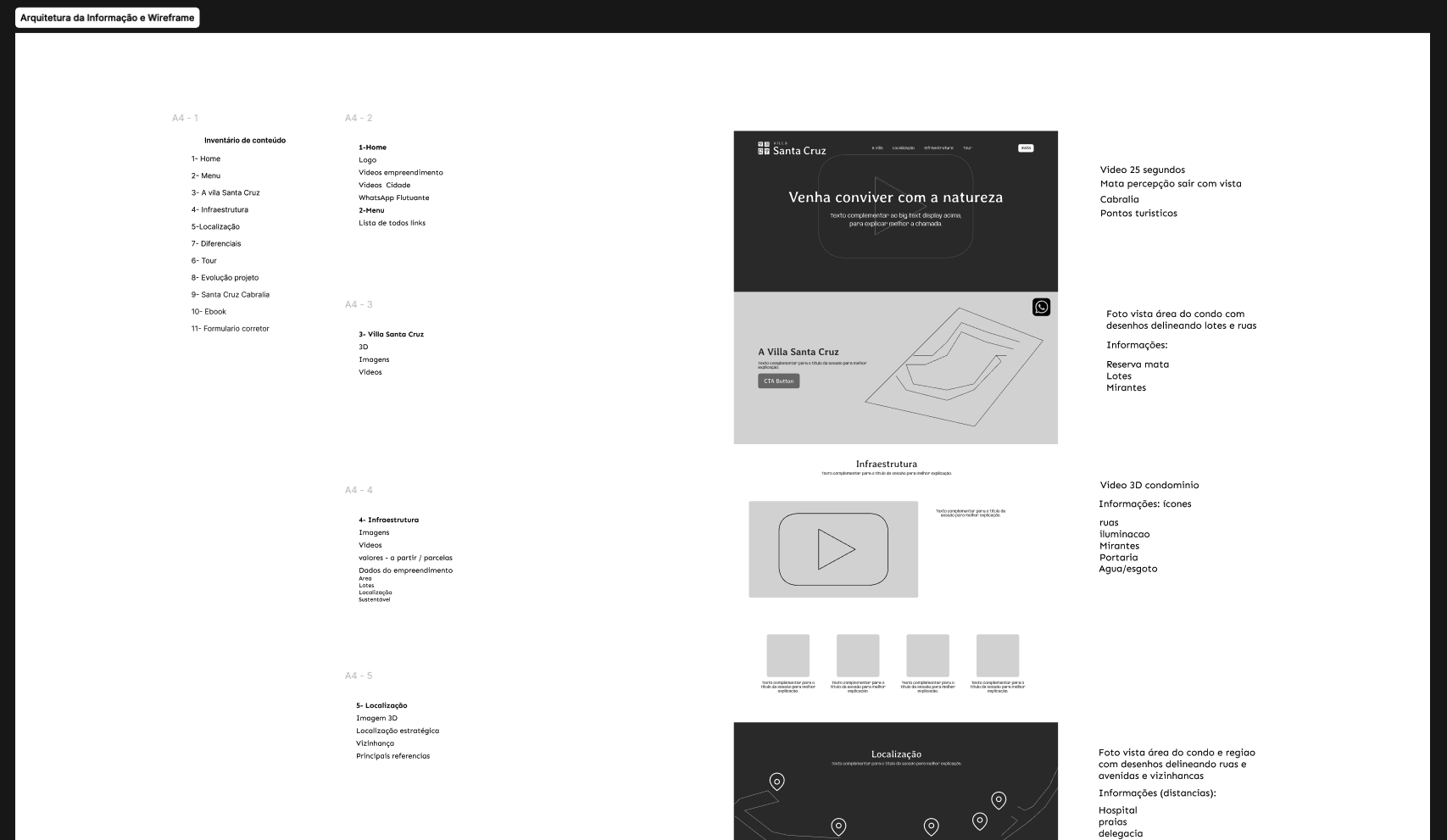
High-level goals
The challenge was to translate these sensations into a digital experience capable of awakening desire even before the first visit to the place. In addition, the platform needed to generate qualified leads for the commercial team and accommodate different media formats, such as immersive videos and 3D virtual tours.
- 01 Communicate exclusivity
- 02 Reinforce sustainability
- 03 Highlight location
- 04 Increase lead generation
- 05 Mobile Experience
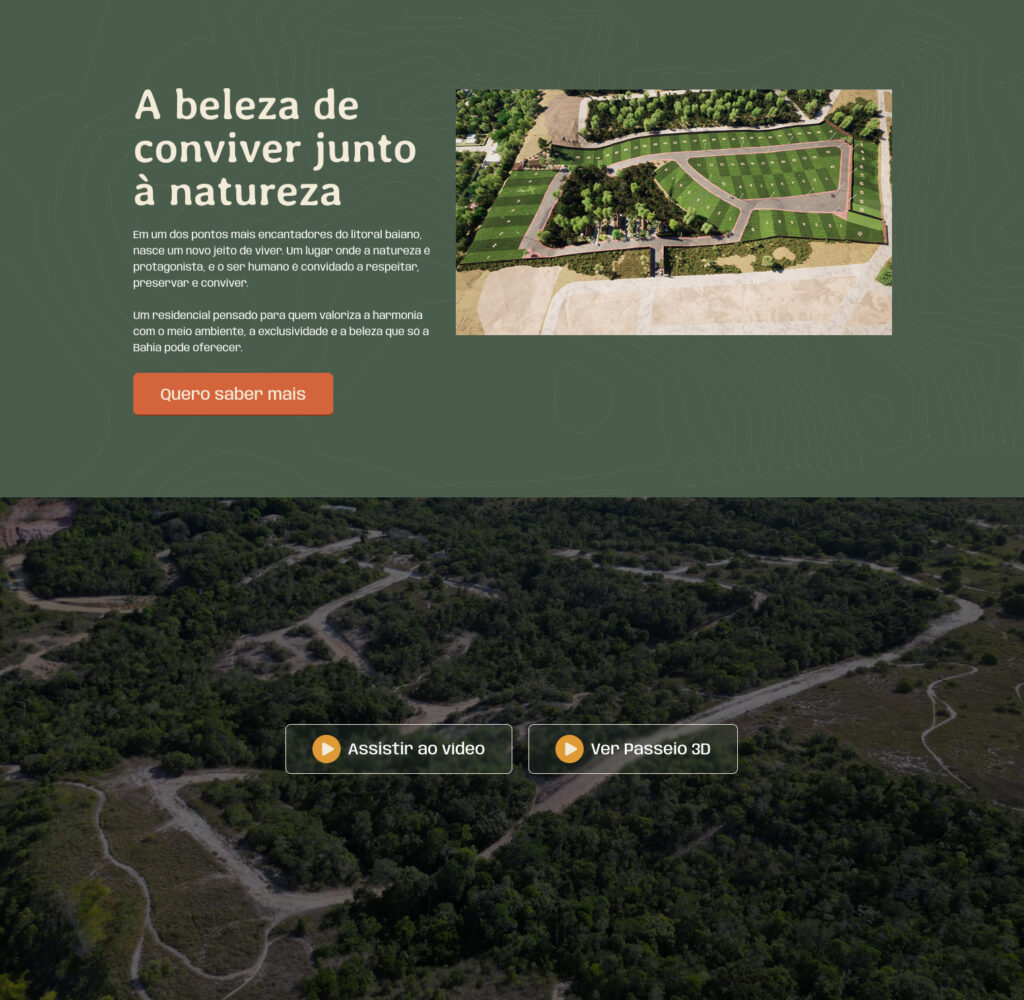
How can we
Hero in video
When visiting an empty land, much of the purchase decision depends on the buyer's ability to imagine what it will be like to live in that place.
Storytelling-based navigation
Instead of presenting specifications at the beginning, we organize the page as a narrative.
3D Tour
When analyzing other launches, we realized that static images could not adequately communicate the size of the enterprise.
Layout Full Width
The interface was designed to remain discreet. The protagonist should be the enterprise.
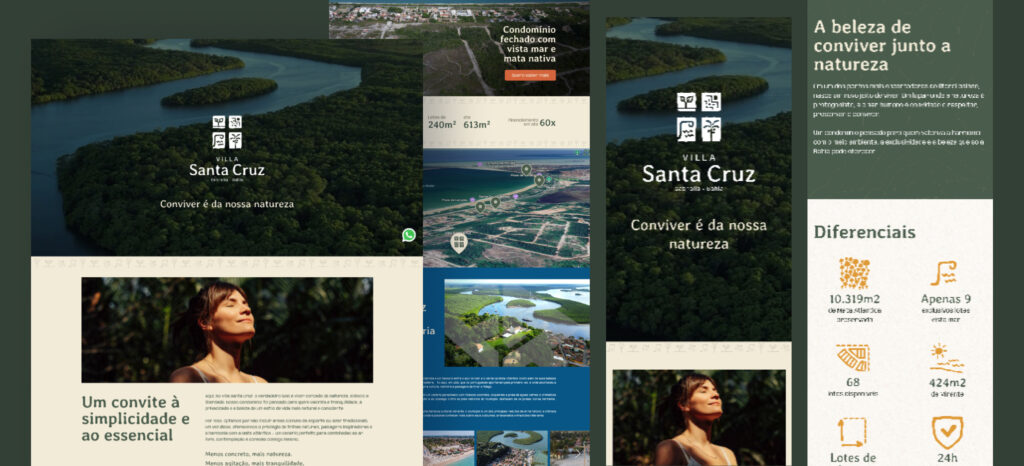
In retrospect
This project reinforced an important perception. In high-standard real estate developments, people don't just buy location or footage. They buy a life expectancy. This influenced the entire information architecture and the way we organize the experience. It also showed that conversion-oriented pages do not need to present all the information immediately. By leading the user through a progressive narrative, it is possible to build value before requesting an action.